

SEO Really Dead? What searching for” Top Trendy Sneakers 2026″Reveals about Modern Search Marketing
Written by Reese Ng
Why search still matters in an intent-driven digital landscape
Search engines continue to play a central role in digital marketing because they capture consumers at moments of active intent. When users search for products, brands are no longer competing to interrupt attention but to provide the most relevant and credible answer. This blog argues that Search Engine Marketing (SEM) remains highly effective when it prioritises user value over algorithmic manipulation, as illustrated through the search query “top trendy sneakers 2026.”
How Search engine like Google determines relevance: Crawling, Indexing, and Query Processing
To understand why certain sneaker brands, appear first, we must look at the three basic components of a search engine:
- Crawler: “Bots” or “spiders” that scan the web for information.
- Index: A massive database where the information is stored.
- Query Processor: The system that returns the Search Engine Results Page (SERP) after querying the index.
To explain how search engines determine which results appear first, I draw on the video ‘How Google Search Work’s, published in 2024 on YouTube by Google, the organisation that operates the world’s most widely used search engine.
Search Engine Marketing in Practice: SEO and PPC as Complementary Tools
Search Engine Marketing consists of two core approaches: Search Engine Optimisation (SEO) and Pay-Per-Click (PPC) advertising. SEO focuses on earning organic visibility by aligning content relevance, keyword intent, and the credibility of inbound links from authoritative and relevant websites, while PPC enables brands to appear in sponsored placements through keyword bidding. Importantly, PPC visibility is not determined by bid price alone, search platforms also evaluate Quality Score, which incorporates ad relevance, expected click-through rates, and the quality of the landing-page experience.
A Real-World Search Example: “Top Trendy Sneakers 2026”
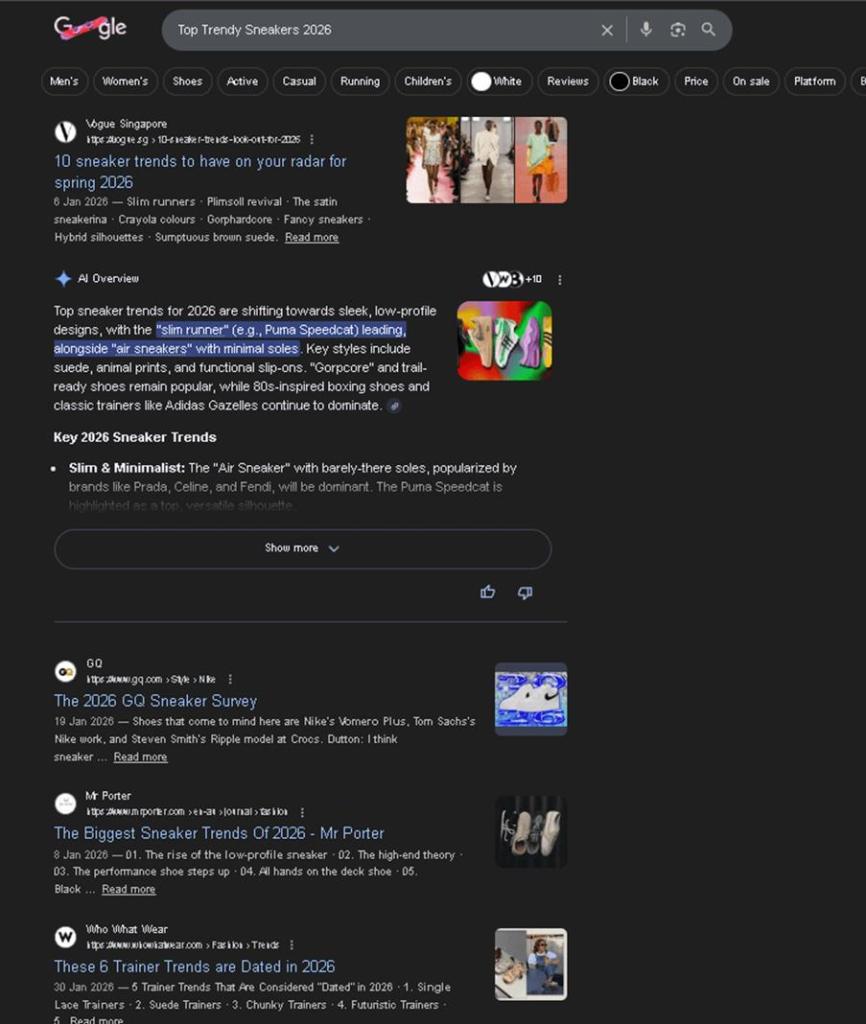
When searching for “top trendy sneakers 2026,” the highest-ranking organic results come from established fashion publications such as Vogue Singapore and GQ. These sites rank highly not simply because they mention the keyword, but because search engines recognise them as authoritative and trustworthy sources within the fashion domain. Their articles are recent, in-depth, and aligned with trend-focused search intent, signalling strong relevance and user value.
SEO supports this process by helping search engines assess which pages are most likely to provide reliable answers. Signals such as domain authority, content quality, and engagement indicate that publications like Vogue and GQ consistently meet user expectations for fashion trend queries. As a result, search rankings prioritise credibility and usefulness, rather than keyword repetition alone.
What Appears First and Why: Organic Rankings Versus Paid Ads
For sneaker-related searches with clear purchase intent, paid listings from major retailers such as StockX or Foot Locker often appear at the top of the results page. However, for the query “top trendy sneakers 2026,” organic rankings dominate instead. This is because the search reflects informational intent, where users seek trend insights rather than immediate purchase options. As a result, search engines prioritise editorial and trend-based content over paid placements, demonstrating that PPC visibility depends on intent alignment and relevance, not budget alone.
Is SEO Really Dying or Simply Evolving?
Claims that “SEO is dead” misunderstand how search marketing has evolved. What is declining are manipulative shortcuts such as keyword stuffing and link farming; what remains essential is high-quality, user-centred content that aligns with genuine search intent. Search algorithms increasingly re
 MKTG1427 Digital Marketing @ RMIT
Leave a comment